
Helping the Club Run Smoothly
Without our volunteers, there is no club.
Burgess Hill Bowls Club is run entirely by its members — from maintaining the green and keeping the clubhouse clean, to running the bar, organising social events, and managing the club's affairs. Every member who lends a hand, however small their contribution, helps make this club what it is.
Member Duties
Every member is expected to carry out one tea duty and one cleaning duty per year. These are shared fairly across the membership and make a real difference to how the club runs.
Tea Duty
Tea duty involves organising the teas at friendly home matches — preparing refreshments and making visiting teams feel welcome. You'll be joined by fellow members on the day, so it's a team effort rather than a solo task.
View Tea Rota → (opens in new tab)Cleaning Duty
Cleaning duties take place on a Saturday morning. A team of three or four volunteers tackle the clubhouse, changing rooms, toilets, and the outside seating area — keeping everything clean and welcoming for members and visitors alike.
View Cleaning Rota → (opens in new tab)Many More Ways to Help
Beyond the rotas, there are countless ways to get involved and make a difference. No contribution is too small.
Maintaining the Grounds
From grass cutting and hedge trimming to keeping the outside areas of the rink looking their best — there's always something to do.
Maintenance & Odd Jobs
Just like your own home, there are always jobs to do around the place — a dripping tap, a sticking door, a shelf to put up or a lick of paint. If you're handy with a toolbox, there's always something you can help with.
Working Parties
Throughout the year we organise working parties to tackle larger jobs — painting fences and sheds, cleaning soffits and gutters, putting the green to sleep at the end of the season and waking it up again in spring.
Social Events
Help make our events a success — running raffles and tombolas, helping with BBQs, baking, or simply lending a pair of hands on the night.
Running the Bar
Our bar is volunteer-run, which is what keeps prices so reasonable for members. If you can help behind the bar, even occasionally, it goes a long way.
Join the Committee
Have your say in how the club is run. The committee welcomes new faces and fresh ideas — you don't need experience, just enthusiasm. See the roles below.
Skills & Expertise
Do you have a skill that could benefit the club? Whether you're a handyman, a designer, a local councillor, or something else entirely — get in touch, we'd love to hear from you.
Spreading the Word
Help us attract new members by promoting club events and open days in your neighbourhood. Word of mouth is one of the best ways to bring new people through the gate.
The People Who Run the Club
Thirteen members serve on the committee and captaincy team, supported by our Rowland Cup organisers, giving up their time to keep the club running. Every one of these roles is filled by a volunteer — and every one of them started out as an ordinary member who decided to get involved.
General Management Committee (GMC)
President
The club's figurehead — represents the club at events and functions, and presents trophies at the end of the season.
Chairman
Chairs the committee and the AGM, and steers the overall direction of the club.
Club Secretary
Handles club correspondence, keeps the minutes, and is the main point of contact with the county and other bodies.
Treasurer
Looks after the club's finances — subscriptions, bills, budgets and the annual accounts — and handles the takings from a busy bar and the many events that go on through the year.
Membership Secretary
Welcomes new members, keeps membership records up to date and manages renewals each season.
Fixtures Secretary
Arranges our friendly fixtures with other clubs and puts together the season's fixture list.
Bar Manager
Keeps the bar stocked and running, and organises the volunteers who serve behind it.
Social Manager
Plans the social calendar — the events that bring members, families and friends together off the green.
Men's Captain & Ladies' Captain
The captaincy team — leading their sections on the green, organising teams and selection, and running club competitions.
General Committee Member
Brings the members' voice to committee meetings and lends a hand wherever the club needs it.
Also part of the captaincy team
Men's Vice-Captain & Ladies' Vice-Captain
Although not members of the GMC, the vice-captains support the captains throughout the season and step in whenever they're needed.
Rowland Cup Organisers
Edward & Gladys Rowland Cup Organisers
Run the club's own inter-club competition from start to finish — contacting the clubs, collecting registrations, organising the draws, keeping order throughout the season, and representing the club at the semi-finals and finals. Find out more about the Rowland Cup.
Captain of the Day
With around 100 friendlies a year, plus league, county, national and invitation games, the captaincy team can't attend every one of the club's matches, so for each match a captain of the day is nominated from the players. They represent the club and make sure everything runs smoothly on the day — a great way to try out a leadership role without a season-long commitment.
You can see who currently holds each role on our About page.
Featured Role
Sweeping the Green
What is sweeping?
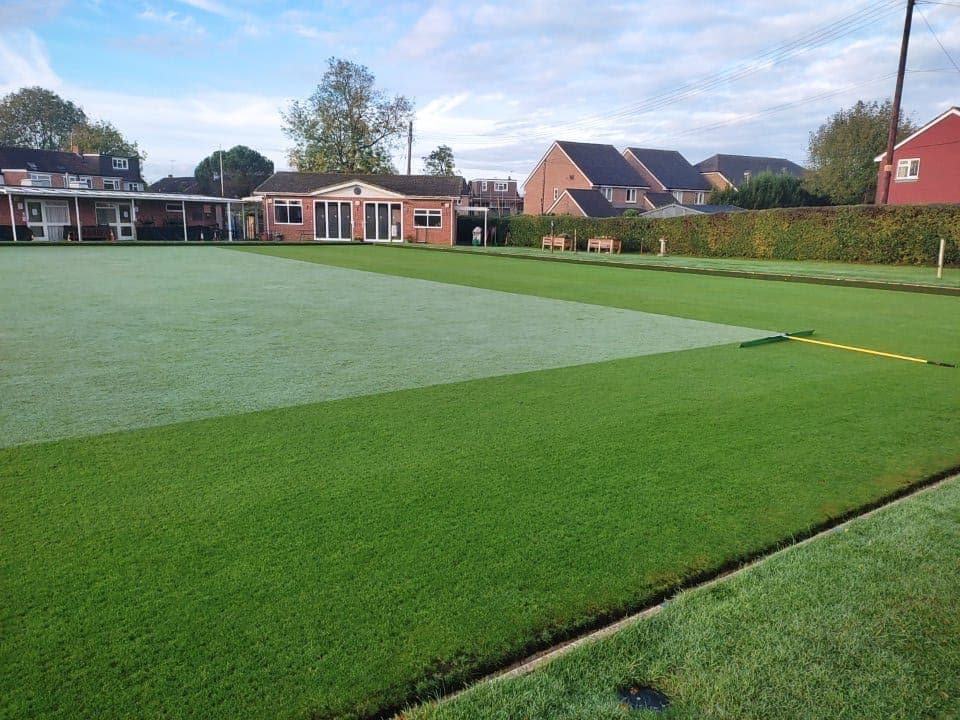
Sweeping uses a long-handled dew brush to sweep the green in overlapping strokes before play, brushing the dew down off the grass and into the soil beneath. Light brushing also controls the grain of the grass, improves ball roll, and helps disperse any worm casts. A swept green plays faster and more consistently than a dewy one. The whole green typically takes around 15–20 minutes.
The photo shows the green mid-sweep. The darker half has already been done — the dew has been brushed in and the grass surface is visible. The lighter, silvery half still has its dew coating, which scatters the light. The difference in playing pace between the two surfaces is immediately obvious to any bowler.
Why does it matter?
There are two reasons, both important. Removing dew keeps the grass as dry as possible, which helps prevent outbreaks of fungal disease — a wet surface left to sit is an open invitation for problems that can damage the green for the whole season. And for the players, a green that hasn't been swept before play will have an uneven, unpredictable surface — hardly ideal when match results depend on consistent pace across all six rinks.
When does it need doing?
During the playing season the green is swept four mornings a week — our greenkeepers cover the other mornings. In the closed season, sweeping continues every morning to protect the surface through the winter months.
Sweeping needs to be done early — typically between 7:00 and 8:00am, before the dew has a chance to dry off naturally or play begins. There's no need to sweep when it has been raining, when the green is frosty, or when there's snow on the ground. If enough members volunteer to sweep once or twice a month, the rota stays manageable for everyone and no one is asked too often.
Interested in getting more involved, or have a skill you think could help?
Get in touch →