
Our History
Burgess Hill Bowls Club — over 130 years at the heart of the community.
- Year
1895
First Bowls Played in Burgess Hill
According to the local press, the first bowls match in Burgess Hill is played this year, on a green on the town lawns behind the Top House public house.
More detail
The earliest recorded fixtures were against the Ditching, Plumpton and Cooksbridge clubs — none of which still exist today. The earliest AGM on record was held at the Burgess Hill Inn (now the Top House) on 12 May 1896.
- Year
1902
The Present Club is Founded
Official records show the formation of the present club.
More detail
The club's own history draws this distinction itself: bowls had already been played in the town for several years (see 1895, above) before the present club was formally established.
- Year
1907
First Floodlit Green in Sussex
The green behind the Top House becomes the first bowls green in Sussex to have floodlights.
- Year
1917
Move to the Lawn Tennis and Croquet Club
The club pays the princely sum of £2 to move to a new home at the Burgess Hill Lawn Tennis and Croquet Club, on what is now the town's shopping centre car park.
- Year
1920
The Green at Royal George Road is Laid
The full-size rink at what will become the club's permanent home is laid by the Chapman brothers, whose family runs the Burgess Hill Steam Laundry on the site.
More detail
The green is laid nine years before the bowls club itself moves there — until 1929 it belongs to the Chapman family's laundry business, on the site the club still occupies today off Royal George Road.
- Year
1929
Move to Westhill Drive
After 12 years at the Lawn Tennis and Croquet Club, the club moves to its current location off Royal George Road, following the closure of the Chapman family's laundry business. The land is sold to the Urban District Council.
More detail
Historical maps confirm the club's continuous presence at this Royal George Road location from this point on — including maps from 1939, 1955, 1962, 1967, 1972 and 1974.
- Year
1932
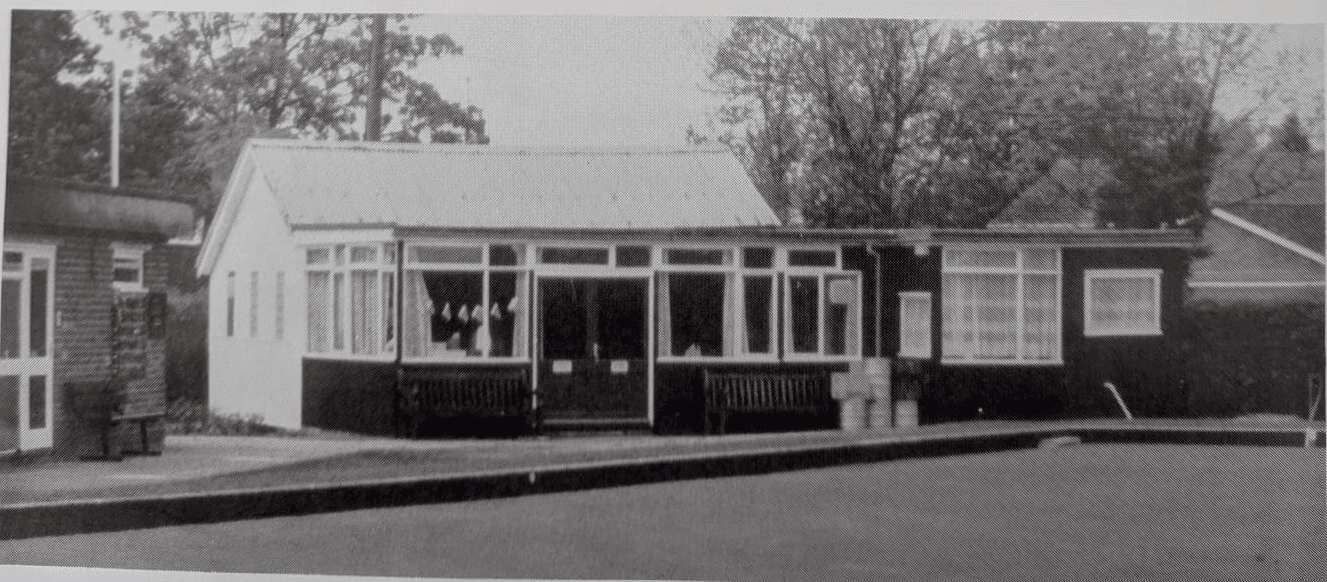
Pavilion Built
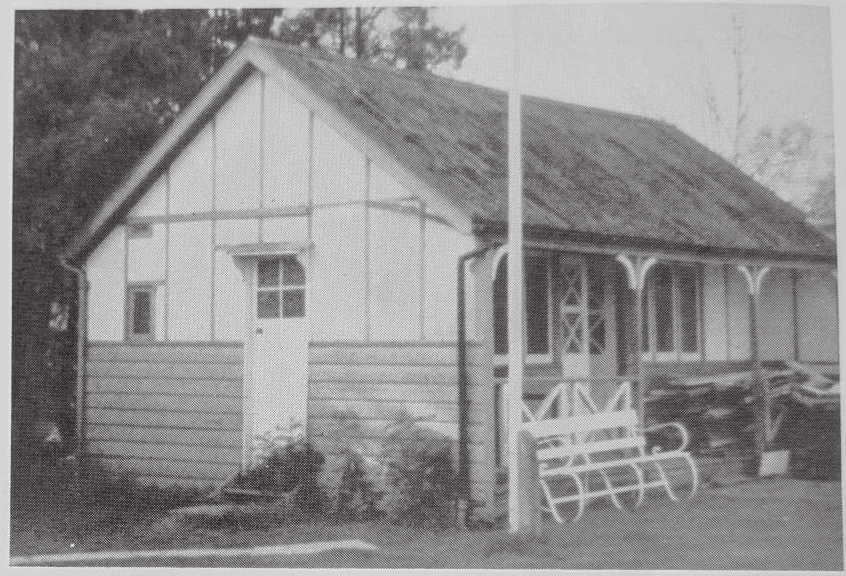
The Council builds an attractive pavilion on the green.
More detail
This pavilion goes on to serve the club for over 60 years. By the 1990s it has rotting structural timbers and is considered totally inadequate for the growing membership, prompting the fundraising campaign that eventually delivers the 1999 clubhouse (see below).
- Year
1974
Passes to Mid Sussex District Council
Ownership of the facility passes to the newly formed Mid Sussex District Council.
More detail
This followed the wider 1974 local government reorganisation, which replaced the former Burgess Hill Urban District Council.
- Year
1976
Members Take on the Pavilion
With the pavilion in danger of collapse, responsibility for the site reverses: the Council takes on maintaining the green — fully renovating it in 1983 — while members take on restoring and enlarging the pavilion.
More detail
The club also funds extensive irrigation works for the green in 1990, on top of the Council's 1983 renovation.
- Year
1981
Rowland Extension
Sponsorship from the then club President, Edward Rowland — after whom the Edward and Gladys Rowland Cup is named — funds a new structure housing changing rooms and toilets for 100 members.
More detail
Edward Rowland served as club President from 1976 to 1983. The new brick structure is a significant upgrade on the original 1932 pavilion, and is one of the clearest direct links between the club and the Rowland family the Cup is named after.
- Year
1994
Freehold Purchased
Concerns over security of tenure in the early 1990s lead the club to negotiate, and eventually purchase, the freehold of the green from the Council.
More detail
Buying the green — together with legal charges and essential plant and equipment — costs around £30,000 in total. The club also erects a new concrete building this year to house the green-keeper's plant and stores. By this point membership has grown to around 150 playing members plus 60 non-playing social members, ranging in age from 12 to 85.
- Year
1999
New Clubhouse Opens
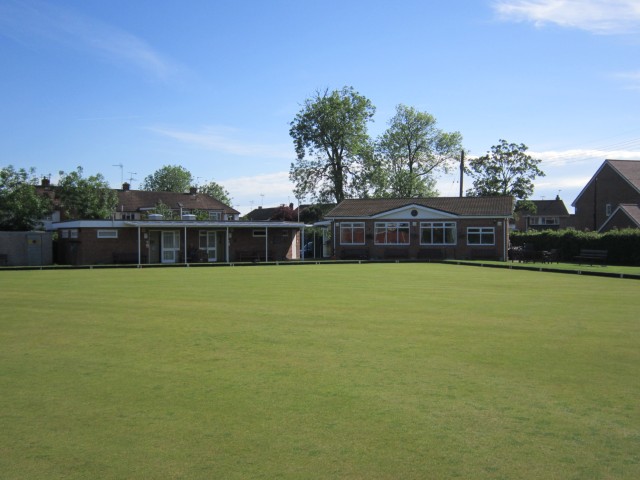
Funds raised by members pay for a new clubhouse, officially opened by the Lord Lieutenant of West Sussex on 23 June — cementing the club's long-term future at Westhill Drive.
More detail
An initial 1996 fundraising appeal had aimed for the new clubhouse to open in April 1997, but the project ultimately took until 1999 to complete. It was officially opened by Major General Sir Philip Ward KCVO CBE, Lord Lieutenant of West Sussex.
In Pictures
Ordnance Survey maps
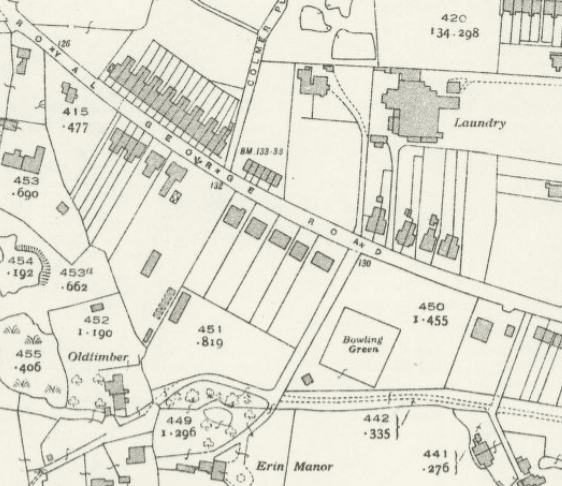
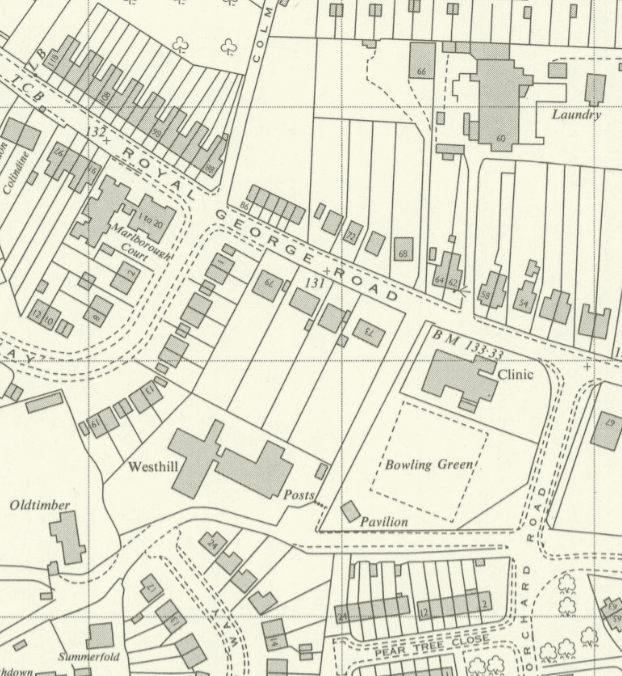
Maps reproduced with the permission of the National Library of Scotland (opens in new tab).
The pavilion, before the 1999 clubhouse
Today
Today, Burgess Hill Bowls Club has over 150 members and fields teams across multiple county leagues. The club continues to host the Edward and Gladys Rowland Cup — one of Sussex's most prestigious inter-club competitions — and remains a thriving hub for both competitive and social bowls in the heart of West Sussex.
Affiliated to Bowls England, the Sussex County Bowling Association, and the Mid Sussex Bowling League, the club punches well above its weight in county competitions and takes pride in welcoming new members at all levels of experience.